
OUR CURRENT FOCUS
TASCA has two missions: one is improving health through clean drinking water, based on the promotion of the Manual Chlorinator. Since 2001 this simple and inexpensive device has proven to be a reliable technology that eliminates harmful bacterial contamination in drinking water in rural water systems.
EXPANDING OUR MISSION
Secondly, our additional mission is to add support of veterans and veteran projects to our mission.TASCA was founded and is managed by veterans and in 2026 it was a seamless transition to amplify our mission to include support of veterans and veteran organizations.
WATER COMMITTEES
Community Water and Sanitation Committees are formed in each rural community, and are trained in the operation and maintenance of the chlorinator with technical support from TASCA technicians. The Chlorinator is inexpensive to buy (+/- $150 US) and maintain, very low maintenance, and all needed materials and supplies for the Chlorinator are available in hardware stores in Nicaragua
Right above: Water Committee in Horizonte Azul proudly displaying their Manual Chlorinator before installation. 2021.


RURAL WATER QUALITY
Collaborating with the Health Ministry (MINSA) and the Nicaraguan Water Ministry, Rural Division ( ENACAL/DAR), TASCA over the last three decades has installed and supported water-testing laboratories in six Departments. These laboratories first used the standard membrane filtration method to detect the presence of contamination in potable water. Later we introduced and tested an inexpensive and simple field test for water quality that measures contamination in water by detecting the presence of bacteria without need of a more expensive laboratory water analysis. These tests for water quality led to the invention of The Manual Chlorinator to solve the issue of contaminated drinking water in rural areas.
Left: Sergio Romero, Project Director (left) and Marlon Castro, Technician (right) constructing a Manual Chlorinator.
PUBLIC HEALTH LABORATORIES
Collaborating with MINSA, TASCA has built and supplied six Departmental level public health laboratories where they did not previously exist. The focus in those laboratories has been improving techniques of laboratory personnel and upgrading equipment used in monitoring disease, including diseases prevalent in rural potable water systems. The laboratories are now better equipped for surveillance of HIV, Dengue, Chagas, Leptospirosis, tuberculosis, antibiotic resistance, water borne bacteria, and other tropical diseases.
Right: TASCA built laboratory in Somoto, Madriz with Nicaraguan Ministry of Health laboratory technicians. 1998.

SUSTAINABILITY AND ENVIRONMENTAL POROTECTION
HOW THE PROJECT WORKS

Sustainability is a critical aspect of any community project and sustain in this context means to continue on. The most effective way to ensure that The Chlorinator installations continue on to supply clean water is for the community members to own the project in all aspects; financial, physical, and emotional. Involvement of the community, especially through the Water and Sanitation Committees (CAPS) in each village is essential for this project to sustain itself. The twenty-year long history of more than 400 chlorinator installations with few non-functional chlorinators, has proven beyond any doubt that when a community assumes responsibility and ownership of a Chlorinator, they will continue to maintain it to the health benefit of the community.
Once the community agrees to the installation of a chlorinator they purchase it for +/- $150 US with the option of long term, no interest payments. Chlorine tablets cost +/- $1 US, and normal usage for chlorine tablets is around 4-6 per month. Each household has previously agreed to pay a few cents per month to a community fund to support their water system. The minimal costs for upkeep of The Chlorinator and chlorine tablets come from this community fund.
Another feature of sustainability is to not have dependence on international sources for project supplies and materials. All chlorinator parts are made of PVC and are available in any hardware store in Nicaragua. There is no reliance on international sources for supplies and materials.
TASCA includes environmental protection and protecting the watershed as part of all chlorinator installations. We educate the communities in the precautions necessary to protect the watershed, the environment, and the water system from contamination. This includes planting trees near the water source for soil erosion control, and not cutting or burning plant overgrowth surrounding the water system. The Water and Sanitation Committee members are responsible for monitoring the areas of the water source to ensure that no waste is discarded anywhere near the water. It is prohibited to construct houses near the water system and the community must keep domestic animals, especially cattle, away from the area of the chlorinator and the water source.
INCLUSIVITY
Working in countries that are traditionally male dominated presents challenges to include everyone as participants in the Water and Sanitation Committee (CAPS.) There are things that children can do to support the water system that are not dangerous or difficult such as washing chlorinator components or bringing needed construction supplies. There are many women holding positions as certified members of the Water and Sanitation Committees. Most CAPS have women as full participants in the duties of the CAPS in maintaining the water system and chlorinator. The goal of TASCA is to include the entire community in our clean water projects regardless of age, race, religion, gender, orientation, or challenges.

COMMUNITY IMPACT
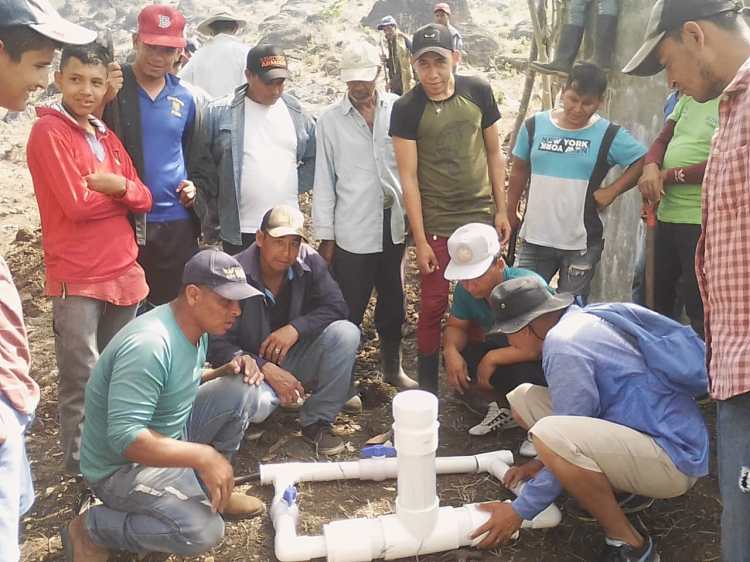
TASCA Project Director Sergio Romero (center) explaining the benefits of the Chlorinator in the community of Horizonte Azul with members of the Water and Sanitation Committee, 2021.
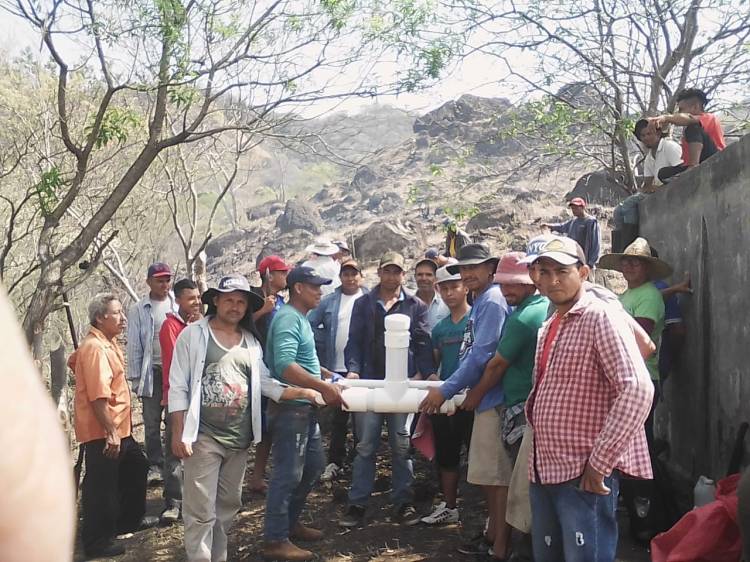
Total participation by the community of Santa Rosa in the construction and installation of The Manual Chlorinator. Matagalpa. 2021
TASCA (Taller de Agua y Salud Campesina), Workshop for Water and Rural Health, has a history of thirty years supporting health initiatives in Nicaragua, Central America through clean water initiatives, building and supplying Health Ministry Public Health Laboratories, and offering scholarships to health ministry personnel for advanced studies in their field. We are officially recognized by the State of Minnesota and the Internal Revenue Service (IRS) as a 501(c)(3) (NGO) Non-Governmental Organization.
 TASCA
TASCA 